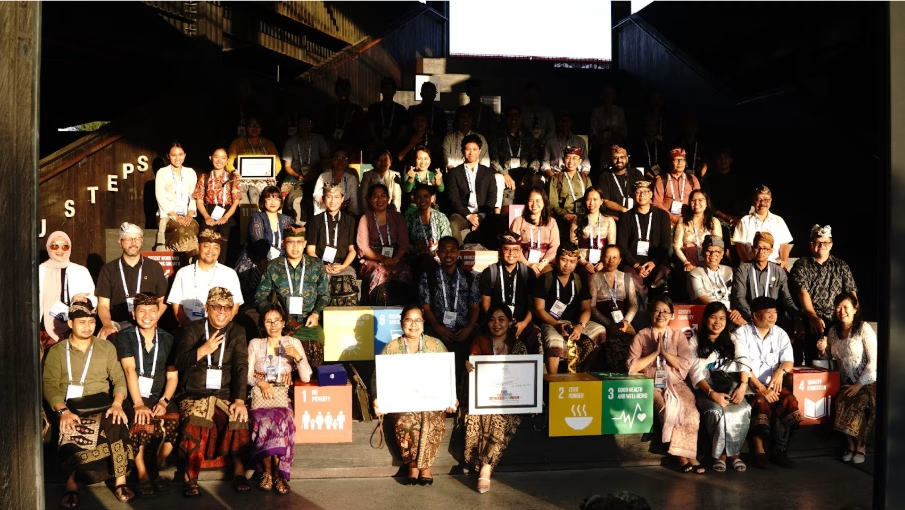

Denpasar, Bali — On September 4, 2025, the Tsinghua Southeast Asia Center, in collaboration with the Faculty of Humanities at Universitas Udayana and Jurnal Kajian Bali, supported by the Center for Worldview Formation and Universitas Mahendradatta, hosted the inaugural International Conference on Indigenous Wisdom in the Contemporary World at UID Bali Campus. This groundbreaking one-day conference brought together 155 participants to explore the practical applications of the Balinese philosophy Tri Hita Karana in addressing contemporary global challenges including environmental degradation, social inequality, and spiritual disconnection.
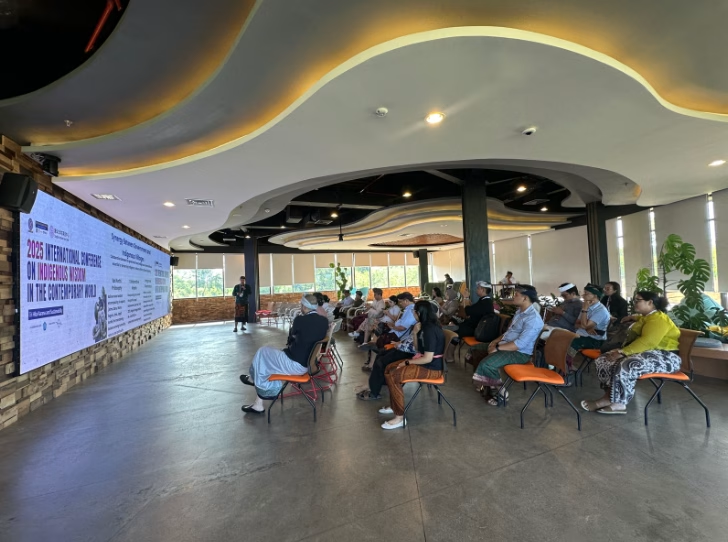
The composition of researchers reflected the conference’s cross-sector vision. A total of 44 original research works were presented, spanning a wide range of topics and disciplines. Participation included 12 universities from Bali, 9 universities across Indonesia, and an impressive international presence with 12 institutions from 9 countries, among them Finland, France, Germany, India, Malaysia, the Philippines, Thailand, the United Kingdom, and the United States.
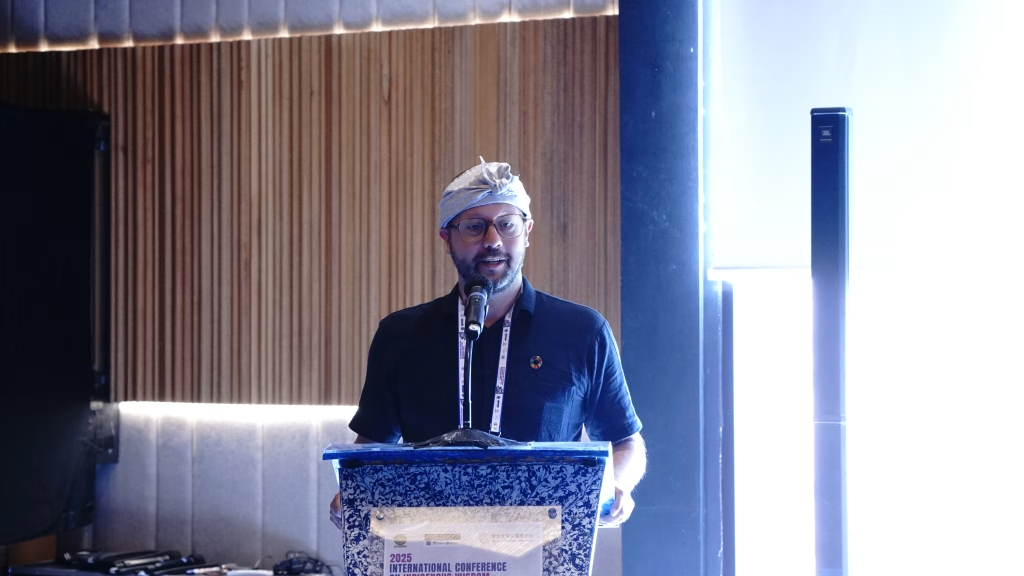
The conference marked the launch of an ambitious annual gathering designed to elevate indigenous knowledge systems as vital sources of insight for sustainable development. As Michael Tuori, Academic Director of Tsinghua Southeast Asia Center and Conference Chair, emphasized: “This conference demonstrates the depth of Tri Hita Karana and its relationship to sustainability. With the many challenges facing our world – environmental degradation, climate change, division, and war, there has been a call to return to our roots, reexamine, and learn from the belief systems that have been maintaining societies for generations.”
Bridging Indigenous Wisdom and Global Sustainability
The International Conference on Indigenous Wisdom in the Contemporary World represents a critical intervention in contemporary discourse on sustainable development. By centering on Tri Hita Karana—the Balinese philosophy emphasizing harmony between people, nature, and the spiritual world—the conference explored how traditional knowledge systems can offer transformative perspectives on the United Nations Sustainable Development Goals.
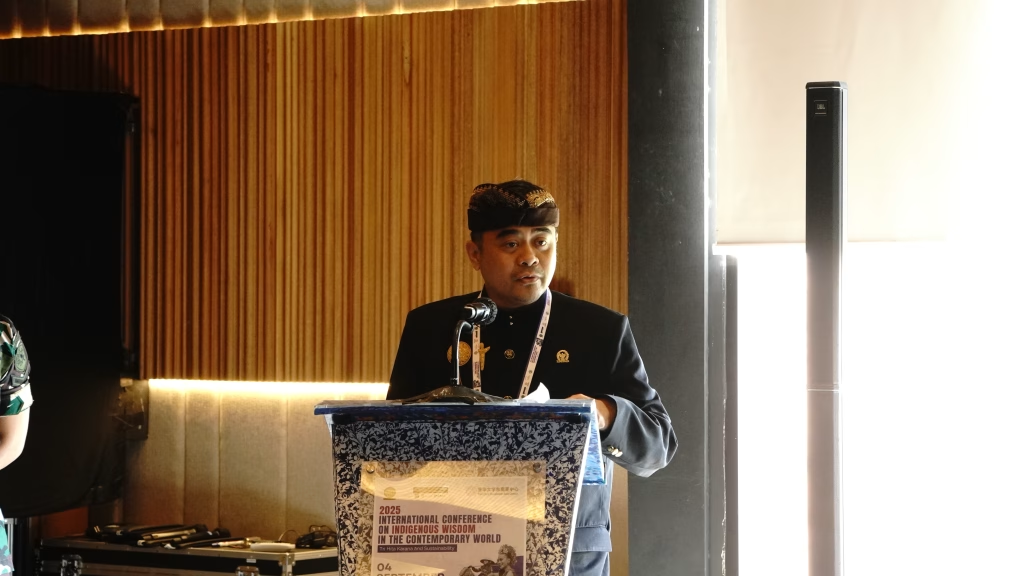
The conference opened with welcoming remarks from Dr. Shri I G.N. Arya Wedakarna M. Wedasteraputra S.III, S.E., (M.Tru), M.Si., representing DPD RI Provinsi Bali, who congratulated Tsinghua SEA and Universitas Udayana on conveying an important conference that brought together intellectuals from across Bali and the world, highlighting its importance in preserving Balinese wisdom for future generations. He expressed strong support for the initiative pledging continued support for future conferences in this important series.
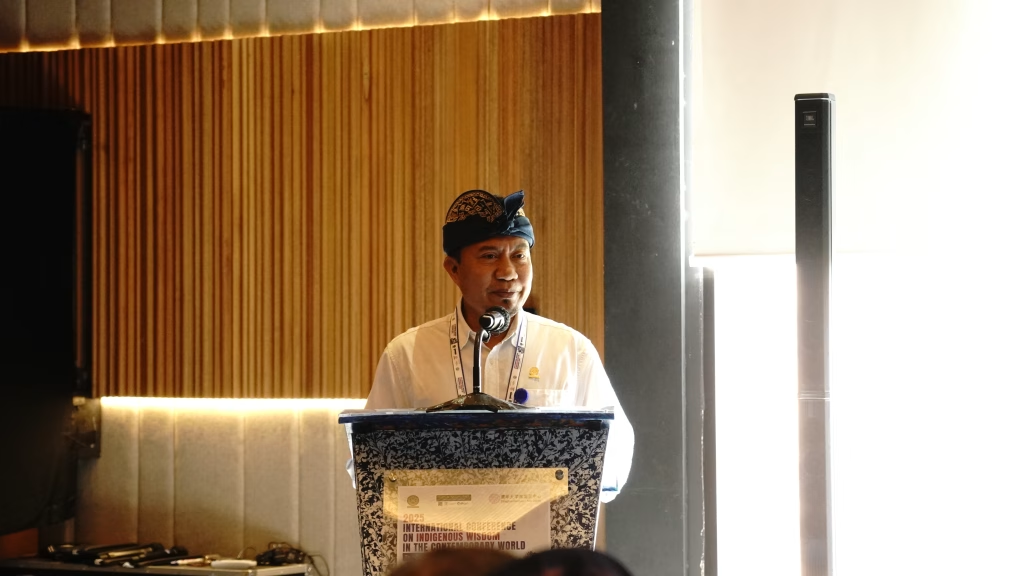
Professor Ir. I Ketut Sudarsana, Rector of Universitas Udayana, highlighted the conference’s timeliness: “In an era of social disruption, natural anomalies, and spiritual drought, the discussion of THK values, which encompass social harmony (pawongan), environmental preservation (palemahan), and spiritual balance (parhyangan), is essential for building both social and natural equilibrium.”
Decolonizing Knowledge Systems
A central theme throughout the day was the imperative to move beyond Western-dominated epistemologies toward more holistic and regenerative ways of living. The conference addressed this through a panel discussion titled “Beyond the Surface: Decolonizing Academic Approaches to Tri Hita Karana,” featuring distinguished scholars Dr. Putu Diah Sastri Pitanatri (Politeknik Pariwisata Bali), I Nyoman Gede Maha Putra (Universitas Warmadewa), and Prof. Dr. Ni Wayan Rustiarini (Universitas Mahasaraswati).
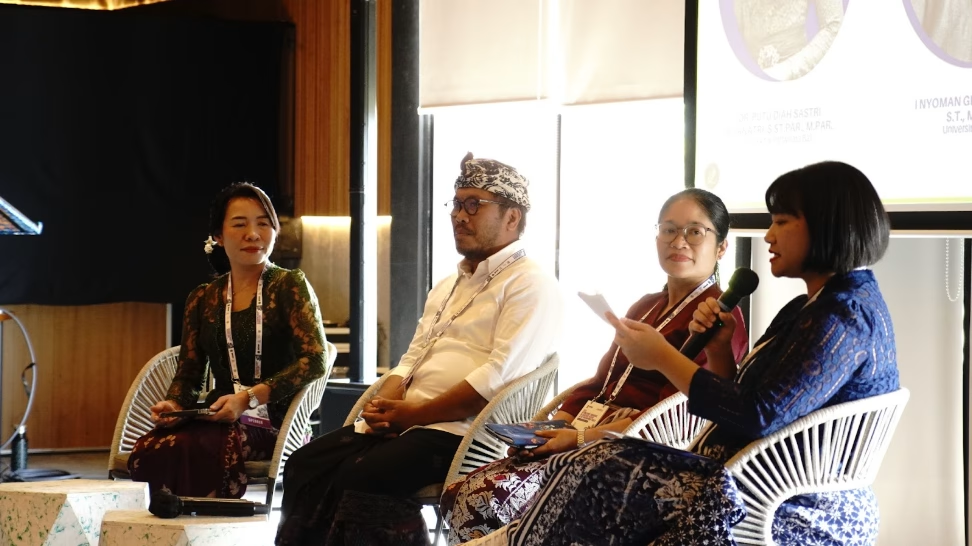
This panel discussion is important because for the Global South in particular, the moment is ripe to reclaim and re-center indigenous knowledge systems as vital sources of insight, resilience, and cultural identity. These systems—rooted in deep relationships with land, community, and the sacred—offer worldviews that diverge fundamentally from extractive, individualistic models.
This convergence created an unprecedented opportunity for dialogue between indigenous knowledge holders, academic researchers, policy makers, and practitioners. As one participant noted, it was rare to see such diverse perspectives gathered in meaningful conversation about applying traditional wisdom to contemporary challenges.
Distinguished Voices and Vision
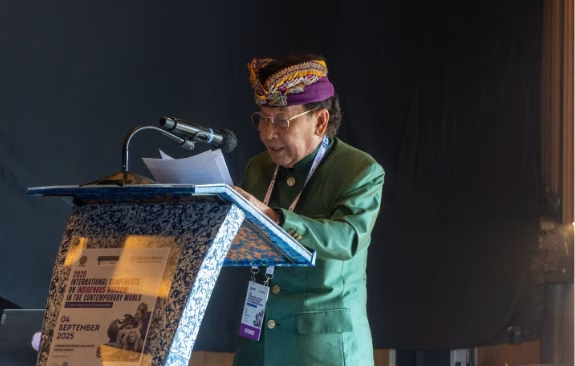
The conference featured a compelling keynote address from renowned Balinese cultural leader Prof. Dr. I Made Bandem, who emphasized: “True sustainability is not only technical but also cultural. It is built on trust, meaning, and the willingness to adapt wisdom to the challenges of our time. We do not need to freeze tradition in the past, nor abandon it for modernity. We need to weave them together.”
In a powerful testament to the global resonance of Tri Hita Karana, Fr. Marcin Schmidt, President of Scholas Occurrentes Vatican and Chair of the Tri Hita Karana Institute in Poland, delivered closing remarks supporting Pope Francis’s call to “come back to our roots,” endorsing Bali’s mission of sharing this wisdom “From Bali to the World.”
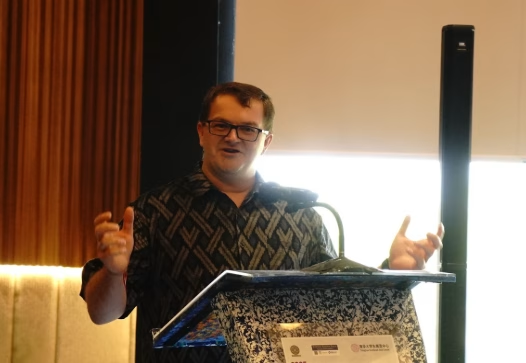
Executive Director of Tsinghua SEA, Nimas Mega Purnamasari, captured the contemporary relevance: “Tri Hita Karana is more than an ancient philosophy. It is a reminder. A compass. A call for us to look within ourselves and to re-examine how we live, how we lead, and how we innovate. Because in this world of technology, disruption, and rapid change, wisdom is not about resisting progress — it is about guiding it.”
The Future of Indigenous Wisdom in Global Practice
The organizing committee has partnered with Udayana University’s Jurnal Kajian Bali (Scopus Q-1 indexed) to publish conference papers that meet academic standards, ensuring the scholarly impact extends beyond the event itself. This collaboration demonstrates the commitment to rigorous documentation and dissemination of indigenous wisdom research.
Catalyzing Collaborative Action
The conference succeeded in its mission to foster cross-cultural dialogue and collaborative initiatives. Through eight thematic sessions, participants explored practical applications ranging from corporate sustainability practices to policy frameworks, tourism development, and spiritual-material integration. The diversity of topics reflected the comprehensive nature of Tri Hita Karana as both philosophical framework and practical guide.
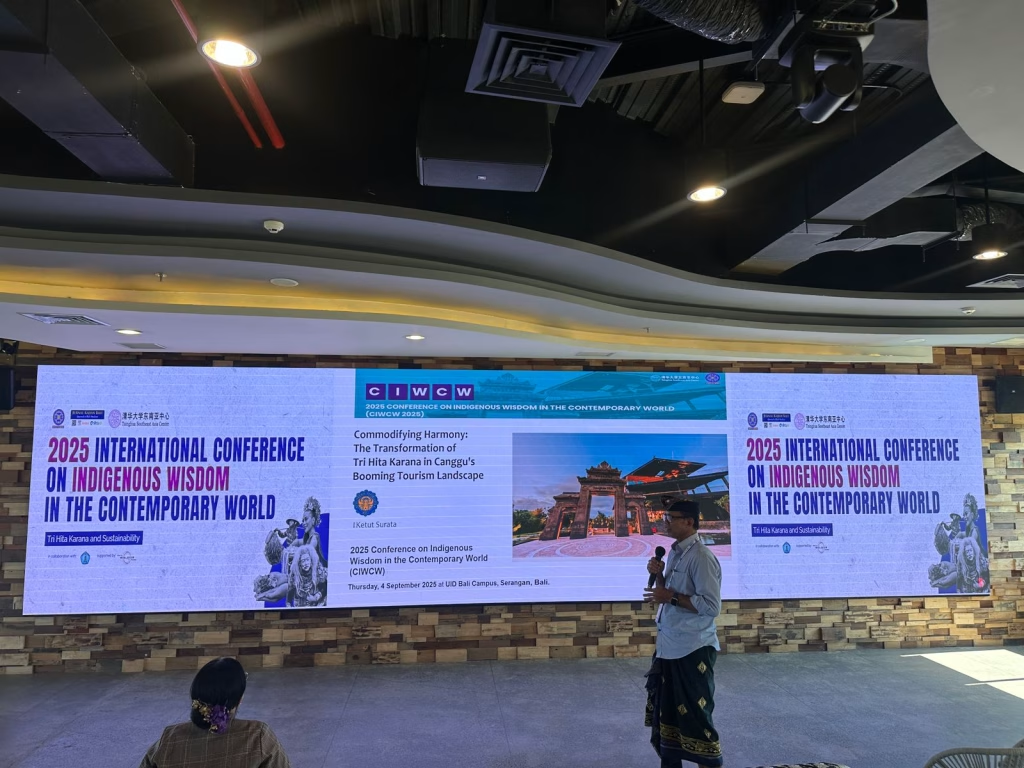
The conversations initiated during this one-day gathering have laid the foundation for an ongoing global network committed to indigenous wisdom applications. Plans for the 2026 conference were announced, establishing this as a sustained platform for advancing indigenous knowledge systems in contemporary contexts.